

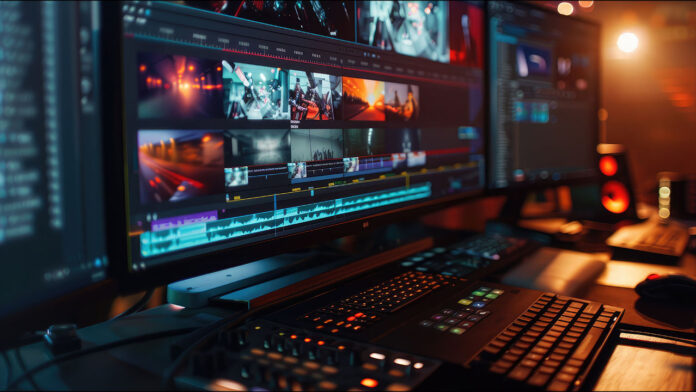
They have become indispensable to the industry and can often save a project if the shoot did not go well. Audiences know their names and their value. They have stature now. The editor is hugely important to the final project.
History
The very first films, were short films, and they consisted of one continuous shot until the film ran out. Audiences watched as they saw events unfold in real life, so there was no feeling something was missing to heighten what they were watching.
But in 1898, the British film pioneer Robert W. Paul decided to introduce more than one shot his film Come Along, Do!. The industry would never be the same again.
Over the next decade, filmmakers across the world introduced a variety of shots into their films. They had all realised that film should not represent how our eyes see things, but the moments our eyes miss. Instead of one long master shot, films were now being released with lots of shots. And these shots needed editing for the scenes to work.
Therefore, editing was now an integral part of post-production. So much so, that directors would think of the edit as they shot.
This editing technique was initially done by physically splicing together pieces of film and attaching them with glue. By 1932, edge numbering of each shot was on every frame of celluloid in order to splice picture and sound effortlessly — known today as syncing. There was no going back, audiences expected to seeing editing in any film.
Editors even started to experiment themselves, and by the 1940s they had developed a technique still used to this day: the montage. Now directors knew they could cover a lot of information in one montage. Editors had again changed how directors shot.
The Four Cuts
Through the life of post-production, the project being edited will change considerably, with lots of different options viewable for scenes and sequences. However, there are essentially four cuts throughout the post-production stage.
- Assembly Edit: Where the footage is assembled into a general cut of the project.
- Editor’s Cut: The editor is given free reign to produce their own cut of the project on how they see it based on the footage and the script. This cut is free from any input from the director.
- Director’s Cut: Working with the editor, the director liaises with them to produce multiple cuts that align with their vision for the project. This version still has moments the editor has brought into the piece, but the overall look is that of the director’s vision.
- Final Cut: The edit used for the grade and final deliverables. This is the version that audiences watch. This will always be a combination of the editor, director, and producer/s agreeing on what the final edit should be.
Trust the Cut
Today, some directors decide to edit their projects themselves, often to save money. This is an unfortunate approach that never improves the project.
The key to editing, is handing over the footage to an editor and trusting them. They are highly trained to look at projects completely differently to the director. A good editor will invariably find or create a moment that a director didn’t even know was there. They understand the director’s vision, but they are always looking for the rhythm and hidden moments to accentuate that vision. They add tempo when it is missing. The good editors always improve the finished result.
It is why, when a director finds an editor like this, they stick with them throughout their career. The editor becomes their creative partner in post-production. They trust them to make their project better. When a fellow director loves the pacing of a project, it is often the editor they reach out to see if they would be interested in being involved with their new project.
Audiences now know the names of the editors. Just as importantly, audiences understand the value of good editing. It is frequently referenced in reviews both as a positive and as a negative. If a film is too long it is the editor’s name that gets mentioned in the reviews, not the director who was in charge of the edit. If the film has pace and never bores, it is the editor that is praised, not the director. The editor now gets the acknowledgement for their work. This was not always the case in the early days of cinema.
For a director, an editor can be their best friend in post.The one that can quite literally, save their project if the shoot did not go according to plan. It is why working with an editor is now the single most important element of post-production.